

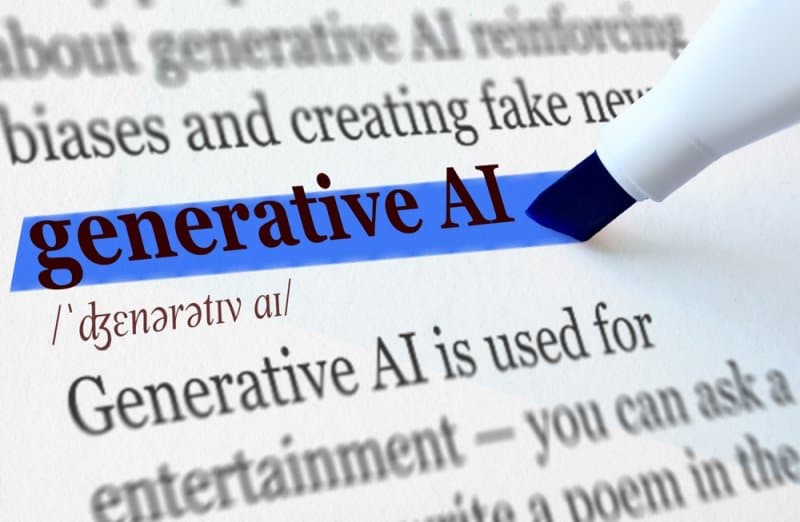
Tech moves fast, but the explosion of generative AI completely flipped the script on how we handle digital workloads. People went from using computers just to organize our files to having them actually write our sales emails, code our backend software, and design our ad graphics. If you are still doing every single repetitive task manually, your workflow is already falling behind. This isn't just some passing trend or a gimmicky internet chatbot. It is a fundamental shift in how machines process information and create original assets on demand.
Instead of just sorting through old databases, this type of tech actually builds things from scratch. You type in a request, and it immediately spits out a fresh blog post, a working block of code, or a custom image. It pulls this off because it already spent months studying billions of real-world examples.
Figuring out exactly how generative AI works means looking under the hood at how machines actually learn. It isn't magic; it is just a massive volume of data processing and aggressive pattern recognition.
Engineers dump billions of articles, images, and code snippets into the system. The model aggressively scans everything to understand basic human language rules, code syntax, and visual structures.
The neural network starts connecting the dots. It figures out which words usually sit next to each other in a sentence and how shadows naturally fall on a face in a photograph.
When you type a request, the system breaks your sentence down into tiny data tokens. It analyzes your exact context and intent before it does any heavy lifting or asset creation.
The model doesn't just copy and paste from Google. It mathematically predicts the next best word or pixel, building your final asset from scratch in real time.
Integrating generative artificial intelligence into your daily workflow completely wipes out repetitive, low-value tasks. Here is exactly how smart teams are leveraging this tech to scale up fast.
Writers and marketers never have to stare at a blinking cursor again. You can instantly generate rough first drafts for blogs, ad copy, and social posts to get the momentum going.
Developers use these setups to spot annoying syntax bugs and write boilerplate code. This knocks hours off the development cycle and lets engineers focus on the hard system architecture.
Design teams can spin up dozens of product mockups or advertising backgrounds in seconds instead of spending a whole afternoon clicking around and masking layers in Photoshop.
Modern bots don't just give robotic, pre-programmed menu answers anymore. They read a customer's specific problem and write a custom, empathetic response on the fly.
You don't need a computer science degree to start taking advantage of these generative AI tools right now. Drop these platforms into your daily routine and watch your output double.
The undisputed heavyweight for text generation. Use it to brainstorm campaign ideas, write tricky client emails, or summarize massive PDF reports in just a few seconds.
If you need hyper-realistic images or stylized digital art, this tool crushes the competition. It takes basic text prompts and turns them into massive, high-res visual assets.
A total game-changer for software developers. It lives right inside your code editor and actively suggests entire lines and functions while you are typing.
Built specifically for marketing teams. It understands brand voice and churns out high-converting landing page copy and social media captions without sounding like a generic robot.
Forget renting a camera crew. You can type up a basic script, and this platform will generate a highly realistic video of an AI avatar reading your exact words.
We are way past the experimental phase of this technology. The businesses that aggressively adopt generative AI right now are going to completely outpace their competition. You simply cannot afford to keep doing routine tasks manually when your competitors are automating their entire content, design, and coding pipelines.
It is a specific machine learning setup that builds new assets from scratch instead of just categorizing old ones. It works by studying massive amounts of internet data, learning the underlying patterns, and using probability math to predict exactly what should come next when you give it a prompt.
Right now, the biggest everyday use cases are SEO copywriting, automated coding assistants, synthetic voice generation for video voiceovers, and generating custom stock imagery for digital ad campaigns.
Yes, if you aren't paying attention. If you paste proprietary source code or private financial data into a public model like the free version of ChatGPT, that data can technically be absorbed into its training set. Always use secured, enterprise-level versions for sensitive work.
Google has flat-out stated they do not penalize AI content just for being AI. However, they aggressively penalize low-quality, spammy garbage. If you just copy-paste raw outputs without editing for quality, flow, and user intent, your search rankings will tank.
This happens when the model confidently lies to you. Because it just predicts the next best word based on probability, it can sometimes string together a highly convincing sentence that is entirely factually incorrect. You always have to fact-check the output before publishing.
This content was created by AI